Tours of the historic Allegheny Observatory are once more available for free to members of the public, offering visitors the chance to view the stars and learn about the history of astrophysics.
Tour season for the observatory begins in April and runs through October. This year, tours are taking place on Wednesdays and Fridays in April, and Thursdays and Fridays during the rest of the season. While the tours themselves are free, there is limited space on each tour, and reservations are required, either by calling (412) 321-2400 or by looking up the observatory’s tours on the website Eventbrite.
Although the season is just getting started, those interested in attending these tours are encouraged to sign up soon.
“They fill up sometimes weeks in advance,” said Kerry Handron, outreach coordinator at the observatory.
During the course of the roughly two-hour tour, attendees will learn about the history of the observatory and, if it’s a clear night, get a chance to stargaze with its telescopes. In addition to the regular tours, the observatory hosts various events during tour season, such as Open House Days (the next of which is to take place on April 19) and Haunted Space Mansion on the Sunday before Halloween.
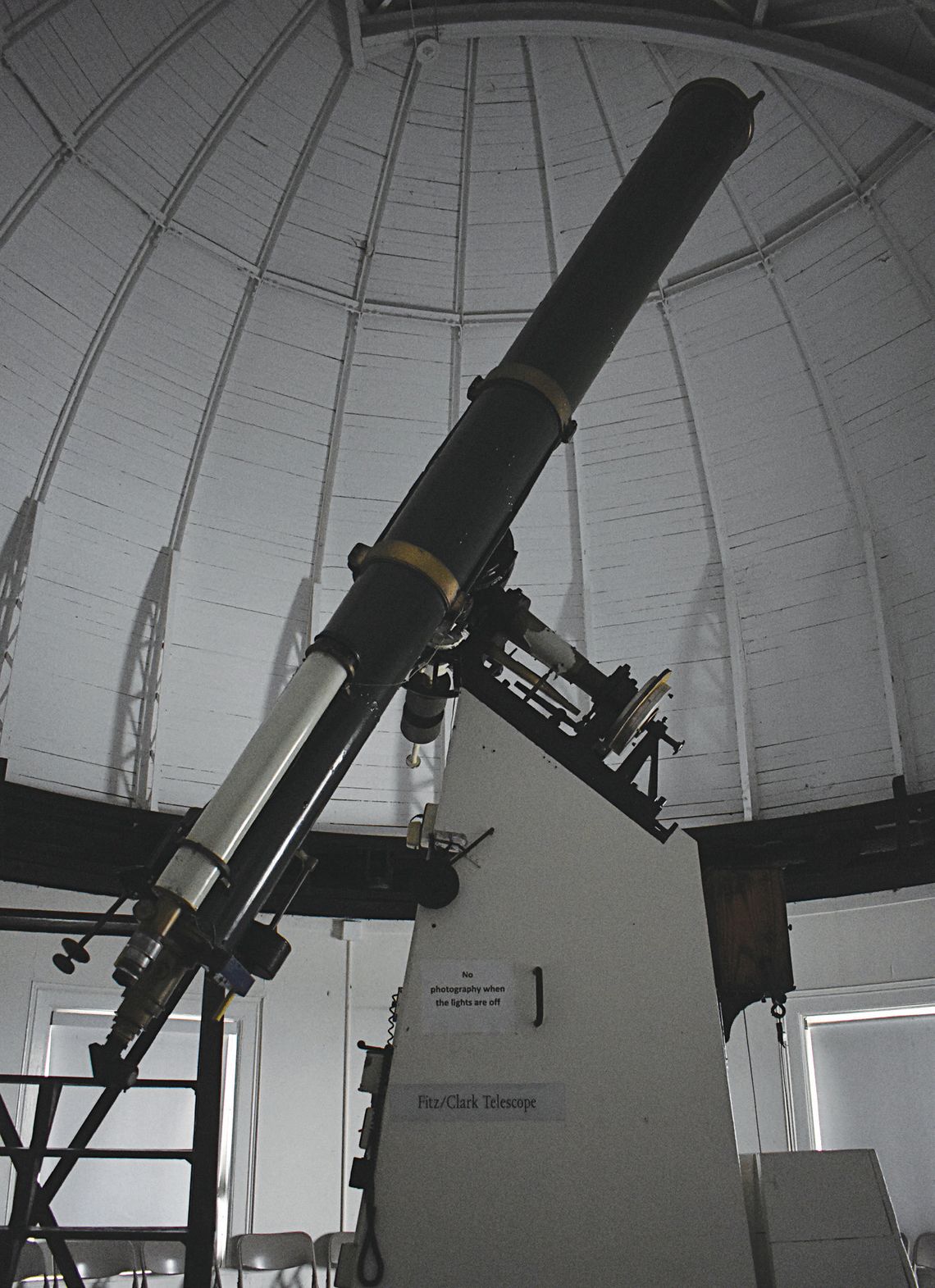
Handron, who has been at the observatory for three years, said showing off and using the telescopes are her favorite part of conducting the tour. She said people are often surprised to see how large the telescopes are or just how realistic celestial bodies appear once seen through one of these powerful viewing devices. That latter point holds true for her regardless of what space object the person is looking at.
“I can get as excited about the Moon as about the Veil Nebula as about the Delta Scuti star,” she said.
The observatory is currently home to three telescopes: a 13-inch one dating back to 1861, a 30-inch one completed in 1912 and the much more modern Keeler telescope. The first two telescopes are included in the tour, while the Keeler telescope is usually not, as it is used by University of Pittsburgh students for academic purposes. Handron said students are able to remotely access the telescope from their dorm rooms and have it gather data from across the sky.
A history
The Allegheny Observatory has its origins in autumn of 1858 with the passing of Donati’s Comet, then termed the “most beautiful comet on record,” according to the documentary “Undaunted: The Forgotten Giants of the Allegheny Observatory,” which details the history of the observatory.
Three wealthy Allegheny City citizens, Josiah King, Harvey Childs and Lewis Bradley, were captivated by the comet and formed the Allegheny Telescope Association, with the goal of purchasing a large-scale telescope and the construction of an observatory. They gathered together many of the city’s wealthy class to contribute towards this project.
A grand opening for the observatory was planned in 1862, but was disrupted by the start of the Civil War. Many of the association’s members lost interest as the war and its effects on their businesses diverted their attention. From 1863 to 1865, the observatory fell into disuse and disrepair until local industrialist William Thaw Sr. proposed donating it to the Western University of Pennsylvania, the forerunner to the University of Pittsburgh.
The observatory’s first director was the famed astrophysicist Samuel Pierpont Langley, who, among other things, is known for the invention of the bolometer — a device able to detect and measure infrared light — and for determining the brightness of the sun.
“We now measure the brightness of the sun in Langleys,” Handron said, referring to the unit of measurement named after the man.
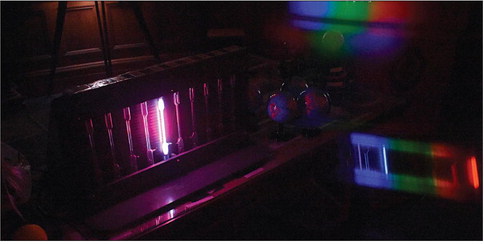
The observatory’s second director, James Keeler, is also well-known for determining that the rings of Saturn are made up of multiple smaller masses, rather than giant solid rings. Keeler made this discovery at the observatory and did it by examining the spectrum of light emitted by the planet’s rings, determining that they were moving at different speeds from one another.
Two other famous figures from the observatory’s history are husband and wife John and Phoebe Brashear. The Brashears came to the observatory’s attention when John approached Langley to get his opinion on a telescope the pair had been building in their spare time, which impressed the observatory director.
John would go on to construct many pieces of viewing equipment for the observatory, and even served as the building’s director from 1898 to 1900.
John and Phoebe are also known for their love story, Handron said. Such is their bond that the pair’s ashes are mixed together in the same urn in a crypt located in the observatory’s lower levels. Also within the crypt are the remains of James Keeler, as well as his son and wife.
For more information about Allegheny Observatory tours, visit observatory.pitt.edu/events/public-tours. To register for a tour, visit eventbrite.com/e/public-tours-tickets-1982476190653?aff=ebdsoporgprofile.