*Editor’s note: This is the second and final part of a two-part article looking at the contrasting histories of Brunot Island and Washington’s Landing. It was written by Macklin Monaghan, a former intern for The Northside Chronicle, as an internship final project. See the March 2026 issue or our website, thenorthsidechronicle.com, for the first part of the series.
During these same years however, Brunot Island witnessed a contrasting turn of events.
While not directly correlated to Westinghouse, his development of the island lead to the infrastructure needed to properly access the island, in which in 1903 — the same year that the railroad was constructed on Washington’s landing, a group of businessmen organized under the Pittsburgh and Allegheny Driving Club and constructed a one mile oval dirt race track on Brunot Island; of which, horse and motor vehicle races were hosted for an audience on the island. The first race was hosted in 1904, and in the following year Louis Chevrolet took the AAA championship title taking place on the island, according to WESA, Pittsburgh’s NPR news station.
According to the National Park Service, this opportunity was short-lived, as Pittsburgh’s demand for energy increased and with it the powerplant as well, which increasingly expanded across the entire island by the 1930s, driving out the racetrack and its occupants.
By 1972, Duquesne light began operation of an oil-fired six-unit cycle peaking facility, which continued activity until Orion Power Midwest announced a conversion of the plant into a more efficient and environmentally friendly natural gas power plant, according to Historic Pittsburgh.
The plant has continued operation since then. While Brunot Island is known by the public as a Duquesne Light facility, today it is divided between two corporations.
This was exemplified during the 2023 fire on Brunot Island, in which multiple explosions occurred due to a power transformer failure leading to billowing smoke in the sky.
During this event, it was clarified by Pittsburgh’s Action News 4 that the power generating plant facility located on the island is under the operation and ownership of GenOn, a power producing corporation delivering electricity to customers in the Northeast and Mid-Atlantic, according to GenOn’s website.
Meanwhile, Duquesne Light continues to hold a presence on the island, however its role in the energy industry is different from that of GenOn.
According to Duquesne Light’s website, its role in the region’s clean energy future is transmission and distribution of electric energy.
The key difference being that while Duquesne light conducts the transmission and routing of energy to Pittsburgh homes, the facility producing energy is under the directive of GenOn.
According to WESA, despite energy workers being present in the area, today a majority of the island is occupied by wildlife and animals.
Since the fire, events have seemed seldom on the island. However, on July 15, 2025, on behalf of the Duquesne Light company, the EADS group addressed Pittsburgh Council Members by revealing a permit application for a construction project named “BI Backchannel River Crossing Project,” involving the enhancement of electrical infrastructure, replacing conductors, and the installation of a duct bank on Brunot Island.
Unlike Brunot Island’s progression into the modern industrial complex, Herrs Island began seeing demise in its industrial outlook in the 1970s, with less than one-fourth of the island consisting of active operations at this time. Meanwhile, the rest of the island began to show its wear of dilapidated infrastructure, and industrial blight, according to a case study done by the Urban Land Institute.
“I just remember the people up on Troy Hill saying, no one’s ever going to buy a house on that island, because they remembered it for what it was, old stock yards and slaughter houses. But no, it really turned into its own community, you know,” said Northside resident Ray Meyer when referring to the first developmental planning of the island.
“In the early 80s or late 70s, plans started being made to turn Washington’s Landing into what it is now, light industry and residential living” said Meyer.
It wasn’t until the end of this decade of collapse that the process of redevelopment and interest in the island began taking action. According to Carnegie Mellon University (CMU), through 1978 to 1989, in a combined effort of the state and Urban Redevelopment Authority, dozens of acres of land were purchased from the industrial companies in order to establish both a park and marina, as well as residential living. This marked the birth of Washington’s Landing, a name coined from the previously mentioned visit of Washington himself, thus bearing a new name in coexistence with Herrs Island to highlight its redevelopmental effort.
According to CMU, after acquiring ownership of the island, waste materials from rendering operations, high levels of heavy metals, contaminated soil, ground water that did not meet drinking standards, as well as a plethora of other hazardous materials were all found on the island, a lasting impact from the industrial operations that occurred for over a century. In addition to this, to create the marina that is now present today, sunken barges had to be lifted from beneath the river, and decaying organic waste such as livestock had to be extradited, solving the long term stench of the island that surrounding communities had experienced for years — in total costing both the city, government, and public investors over $44 million to complete the redevelopment.
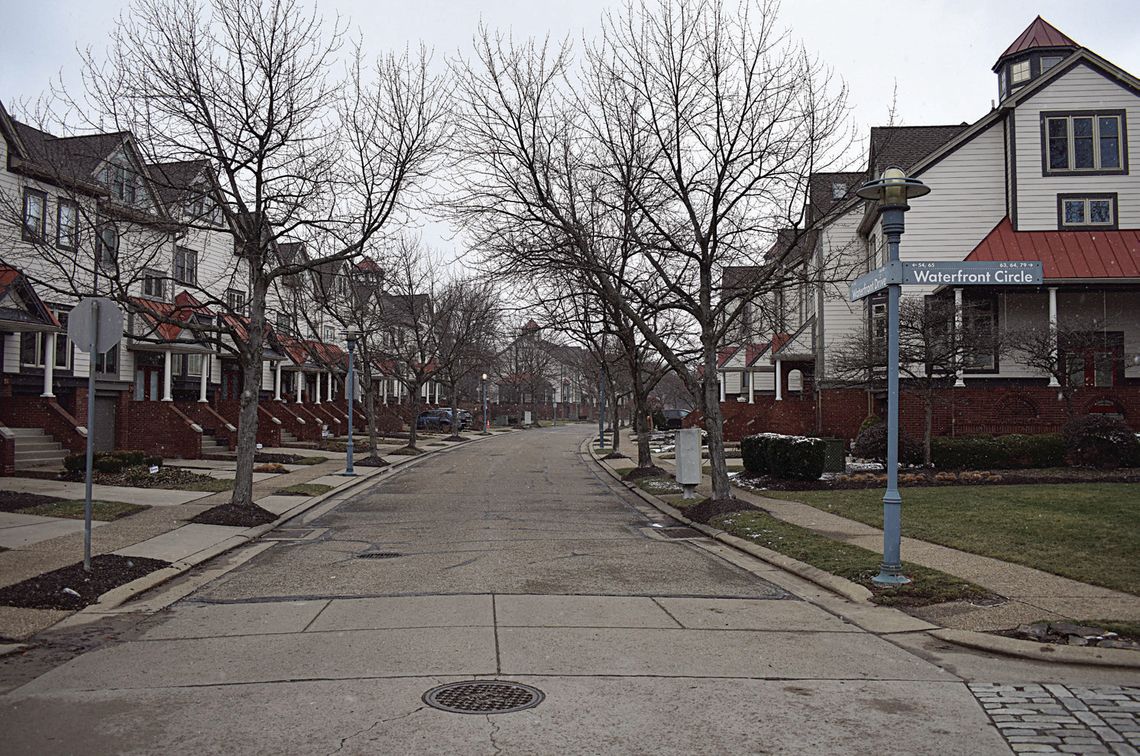
“I forget how much money they were asking for, I believe it was between $180,000 and $200,000, and everyone was saying “there’s no way someone’s going to pay that for a house”, but again, it was literally stock yards and animal pens, and that is not what you see today,” said Meyer.
In 1983, Pittsburgh City Council pushed a redevelopment plan that would utilize the natural advantages of the island, including pedestrian trails circulating the outer island, landscaping that would better conceal inner infrastructure, and high income housing projects that offered a riverfront view, according to the Urban Land Institute.
Today, Washington’s Landing hosts such attractions as the Three Rivers Rowing Association, a privately held marina for boat owners, corporate enterprise, and recreational amenities such as tennis courts and even a restaurant named Redfin Blues. As part of the Three Rivers Heritage Trail, a walkway encircling the island takes pedestrians through the historic railroad bridge and park, with multiple viewpoints looking over the Allegheny River.
Washington’s Landing Marina owner David Gregory explained how his business was one of the first developments on the island, following the redevelopment project. Gregory said his father was early in the bidding process and was able to acquire the marina after the city government pushed for entrepreneurs to help create opportunity and build up the community using financial incentives.
“It was certainly a risk, but in the long run it certainly paid off,” he said. “It turned into a great, great, place.”