Business and nonprofit leaders gathered on the Northside on March 5 at the Kamin Science Center for the Northside| North Shore Chamber of Commerce and the Northside Cultural Collaborative’s Annual Luncheon, an event that brought together some of the region’s most influential voices to explore how tourism can drive meaningful community impact.
Centered around the theme “Beyond the Visit: Tourism That Transforms Communities,” the program emphasized that Pittsburgh’s evolution into a destination city is about far more than attractions; it’s about identity, storytelling, and neighborhood vitality.
Opening remarks highlighted Pittsburgh’s transformation from a steel town into a hub for innovation, culture, and tourism. While visitors are drawn by its skyline, rivers, sports teams, and institutions, speakers stressed that the city’s true appeal lies in its authenticity, the stories, traditions, and people that define neighborhoods like the Northside.
That focus on storytelling set the stage for keynote speaker Rick Sebak of WQED, whose decades-long career documenting the region has helped shape how both residents and visitors experience Pittsburgh.
“If you’ve ever fallen in love with Pittsburgh through a television screen… then you already know the work of Rick Sebak,” the introduction noted. “His storytelling invites people in, builds civic pride, and encourages exploration beyond the obvious.”
Sebak’s work, chronicling everything from neighborhood eateries to historic landmarks, was framed as a model for the kind of authentic, human-centered storytelling that fuels transformational tourism.
The luncheon also featured a panel discussion moderated by Amber Harkleroad of Destination Greater Pittsburgh. Panelists included Jerad Bacher of Visit Pittsburgh, Jason Brown of the Kamin Science Center, Christina Cassotis of the Allegheny County Airport Authority, David Morehouse of the Steelers, and Lucas Piatt of Piatt Companies.
Discussions centered on the role tourism plays in economic development, not just as a driver of visitor spending, but as a catalyst for neighborhood revitalization. Panelists pointed to its ability to fuel small businesses, support entrepreneurs, preserve historic character, and generate investment in local corridors.
At the same time, speakers emphasized the importance of intentional growth.
“Tourism should elevate local voices, not overshadow them,” the program noted. “It should strengthen community identity, not dilute it.”
On the Northside, where cultural institutions, sports venues, and historic neighborhoods intersect, that balance is especially critical. Leaders pointed to the opportunity to convert visitor traffic into long-term neighborhood momentum ensuring that residents benefit alongside tourists.
Ultimately, the luncheon underscored a shared vision: that success should not be measured solely in visitor numbers, but in thriving main streets, preserved heritage, and communities that feel a deep sense of pride.
As Pittsburgh continues to define its next chapter, the message was clear: when guided by authenticity and collaboration, tourism can be more than an industry. It can be a force for transformation.
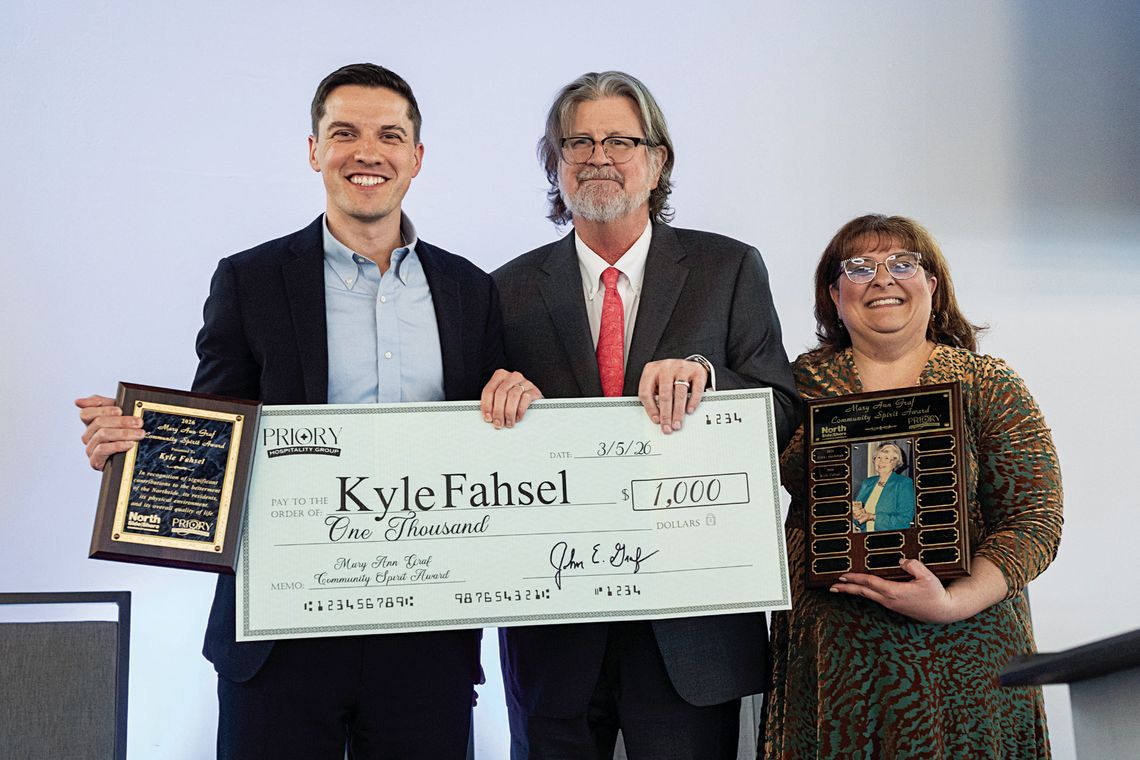
A highlight of the luncheon was the presentation of the Second Annual Mary Ann Graf Community Spirit Award to Kyle Fahsel of Reading Is Fundamental Pittsburgh. The award honors individuals whose work strengthens the fabric of the Northside community.
John Graf, the owner of Priory Hospitality Group, created the award in 2025 in honor of his mother Mary Ann Graf who was a pillar in the community. The recognition also comes with a monetary award for the recipient.
“Reading is Fundamental is an organization that has been near and dear to my mom, Mary Ann’s, heart,” said John Graf. “She had been a public school kindergarten teacher and had seen firsthand the value of encouraging reading at a young age, and the positive results of such encouragement in children’s intellectual growth. When she opened the Priory in the mid 1980’s, my mom immediately befriended her Northside neighbors at RIF and embraced them in a variety of fashions — from financial support to hosting low or no cost events for RIF to assisting with fundraising. Awarding the Mary Ann Graf Community Spirit Award to Kyle Fahsel of RIF brings this support full circle, more than 10 years after my mom’s passing. She would be proud to be a part of recognizing Kyle’s hard work and the great efforts of RIF.”
“I’m extremely grateful for this award and the spotlight it puts on the work of Reading is Fundamental (RIF) Pittsburgh and our supporters, a group that includes hundreds of volunteer reading mentors who commit their time, passion, and energy to cultivating a love of reading in kids,” Fahsel said.
Founded to address literacy inequities, Reading Is FUNdamental (RIF) Pittsburgh focuses on helping children develop a lifelong love of reading while mitigating opportunity gaps that disproportionately affect Black youth and low-income families. In the past year alone, the organization distributed more than 84,000 books and served approximately 15,000 children.
On the Northside, its reach includes Pittsburgh King, Allegheny Traditional Academy, Pittsburgh Manchester, Manchester Academic Charter School, Training Wheels, Propel Northside, Pittsburgh Morrow, Pittsburgh Spring Hill, and Pittsburgh Conroy. Its programs span early childhood through adolescence, from Book Babies and Storymobiles to literacy mentoring initiatives and in-school reading celebrations all centered on access to culturally inclusive, high-quality books.
Fahsel, who has spent 17 years in education, shared that discovering RIF Pittsburgh after relocating to the city three years ago was transformative.
“I honestly didn’t believe it was real. An organization that provides tens of thousands of new, popular, and culturally relevant books for kids to keep,” he said, emphasizing the urgency of addressing what he described as a growing literacy crisis.
As the event concluded, attendees left with a renewed sense of purpose and connection, inspired not only by the vision of tourism as a force for economic and community transformation, but also by the individuals and organizations doing the work every day to make that vision a reality. From elevating authentic neighborhood stories to investing in the next generation through literacy, the luncheon reflected the very best of the Northside—where collaboration, compassion, and commitment continue to shape a stronger, more vibrant future.