In Virginia last month, newly elected Gov. Abigail Spanberger promised to sign a bill that would raise her state’s minimum wage to $15 by 2028. The legislation is moving through the Virginia legislature, and if it reaches her desk, Virginia will become one of at least 23 states that have recently raised their minimum wage.
Pennsylvania is not one of them. At the outset of 2026, prices are on the rise while our state’s minimum wage languishes at the federal minimum of $7.25 an hour. Nearly 300,000 Pennsylvanians still earn between $7.25 and $12 an hour.
That’s not acceptable. I have always been a staunch advocate for a fair day’s pay for all workers, and it’s critical that this issue gains momentum now to help Pennsylvania’s working families and economy. It’s about time.
Pennsylvania’s minimum wage has been stuck at $7.25 an hour for 16 years.
That’s not a typo —16. And in those 16 years, every single one of our neighboring states has raised its minimum wage. Four of our six neighbors have a minimum wage of $15 or more.
Pennsylvania House Democrats have acted on this issue — twice in the past year, in fact.
We recently passed H.B. 2189, which would raise the minimum wage to $15 by 2029 and allow municipalities to reach the $15 mark sooner. The bill is now pending in the Senate.
Last June we passed H.B. 1549, which would give every Pennsylvanian worker a base-level pay of $12 an hour by 2028. But Senate Republicans haven’t moved that bill.
If helping hard-working Pennsylvanians isn’t enough of an argument, perhaps Senate Republicans will be swayed by the economic and budgetary benefits of raising the minimum wage.
Studies regularly show that a higher minimum wage stimulates consumer spending, improves worker morale and productivity, and helps businesses’ bottom line.
Gov. Josh Shapiro, in his budget address in February, also highlighted the benefits to the state budget: Raising the minimum wage to $15 an hour will actually save the state money.
That’s right. The state would save an estimated $300 million on entitlement programs such as Medicaid because of the number of Pennsylvanians who wouldn’t need those programs anymore. Nearly 61,000 people currently rely on Medicaid and make less than $15 per hour.
Shapiro called on legislators to send a minimum wage bill to his desk.
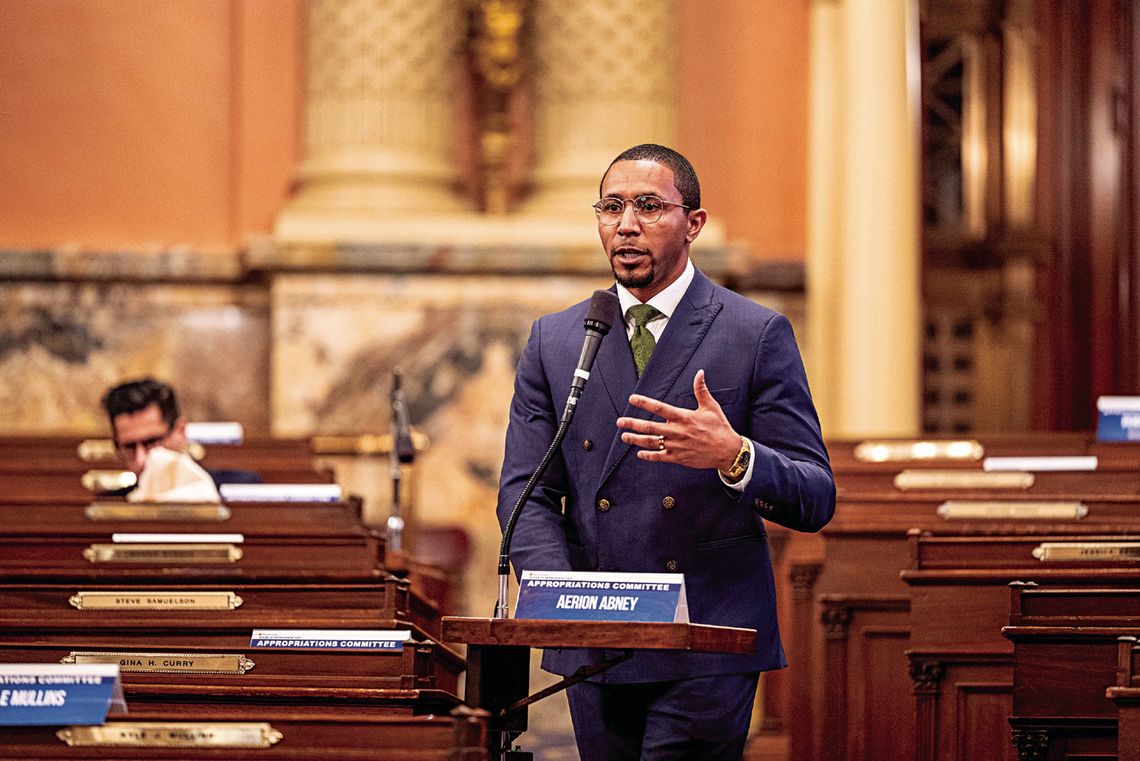
I serve on the House Appropriations Committee, and I will be raising all these valid arguments for a higher minimum wage as we work on next year’s budget: It’s good for workers, it’s good for the economy, and it’s good for our state budget.
And it’s about time.
State Rep. Aerion Abney represents the 19th Legislative District.