In 1788, when western Pennsylvania residents petitioned the General Assembly to create Allegheny County, four of the petitioners were free Black men.
In the 1800s, Pittsburgh was home to many stops on the Underground Railroad, and the neighborhood now called Lower Hill, then dubbed Arthursville, was a major stop. Railroad agents included barber John B. Vashon, believed to be the city’s wealthiest Black man at the time.
A century later, during the Civil Rights Movement, the corner of Centre Avenue and Crawford in the Hill became known as Freedom Corner; it was the meeting point for protesters who marched on City Hall and Washington.
These are just a few of the many chapters of Pittsburgh’s Black history. It’s history we must remember.
Unfortunately, our federal government is doing everything it can to erase Black history.
In a textbook example of doublespeak, the Trump administration has taken many troubling steps to “restore truth and sanity” to American history. What that really means is they are squelching public spaces that explain our country’s legacy of racism to new generations.
“Not everything that is faced can be changed,” wrote James Baldwin, one of the great chroniclers of the Black experience in 20th century America. “But nothing can be changed until it is faced.”
It’s critical — especially at a point in time when the White House is mounting an all-out attack on diversity — that we face our history.
As a recently appointed board member of the Heinz History Center, I’m one of the many Pittsburghers committed to preserving it.
For instance, Heinz History Center exhibits include “From Slavery to Freedom,” which covers 250 years of African American life and history and the fight for civil rights in Pittsburgh.
It’s an in-depth exhibit where visitors can learn about Pittsburghers such as Major Martin L. Delany, who during the Civil War became the highest-ranking Black field soldier in U.S. history, and Daisy Lampkin, a civil rights activist and leading organizer in the Women’s Suffrage Movement.
By contrast, last year President Trump ordered the Smithsonian Institution and the Secretary of Interior to conduct a review to end the influence of “divisive, race-centered ideology.”
In Philadelphia, Trump’s order means the future is uncertain for the President’s House, which commemorates the Black people enslaved by former President George Washington. Also in question has been the fate of a notable photograph of a whipped slave whose back is covered in thick scars after reports that the photo was ordered removed from a national monument in Georgia.
At national parks, the Trump administration has removed MLK Day and Juneteenth from the list of annual free-entry days. Yet it added to the list Trump’s birthday, which falls on Flag Day.
These are just a few examples of how the real story of America’s diversity is under threat, and a few of the reasons why we must fight to preserve it.
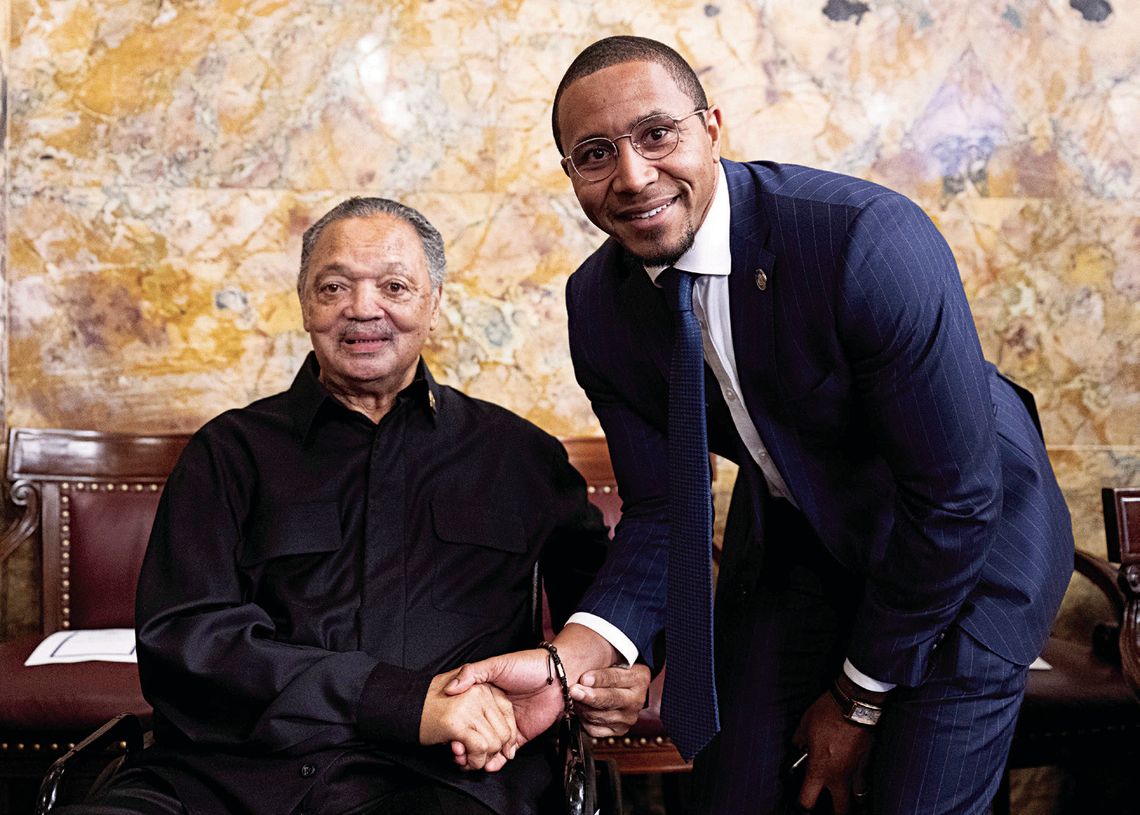
State Rep. Aerion Abney represents the 19th Legislative District.